The true cost of heavy equipment downtime
3
min read


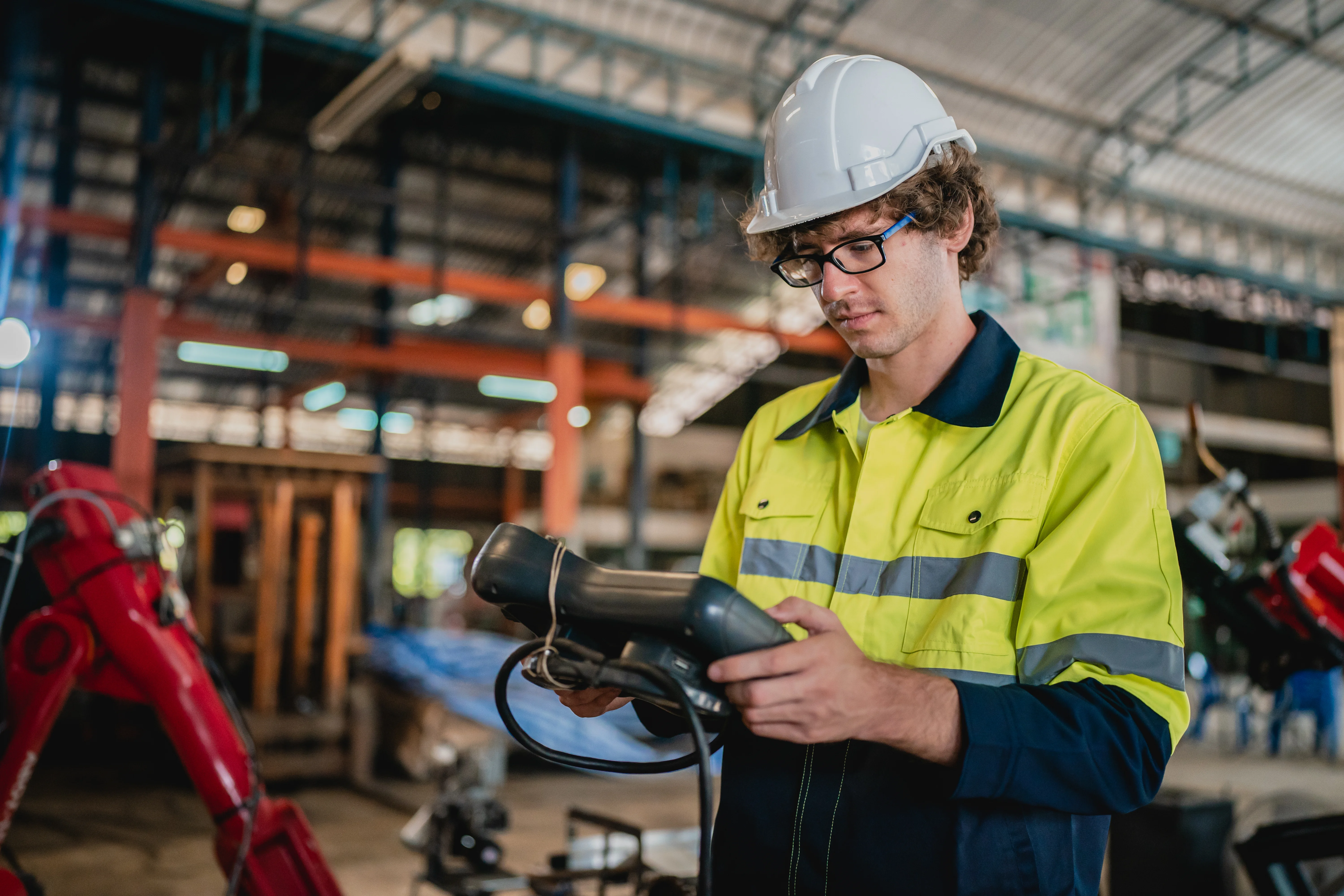


Physical AI refers to artificial intelligence that operates in, understands, or interacts with the physical world.
Traditional AI often lives inside digital environments. It analyzes text, predicts outcomes, generates content, summarizes data, or recommends next steps. Physical AI brings intelligence into environments where real work happens, such as warehouses, manufacturing floors, restaurants, retail stores, hospitals, vehicles, and field sites.
IBM describes Physical AI as AI systems that operate in and interact with physical environments, often using sensors, actuators, and control systems to perceive, reason, act, and learn from outcomes in the real world.
In simpler terms, Physical AI gives machines and systems a better way to understand what’s happening around them. That can include recognizing objects, interpreting movement, understanding spatial relationships, responding to physical conditions, or supporting decisions in real time.
A Physical AI system might use:
The key idea is that Physical AI connects digital intelligence to physical work.
Traditional AI is often used to process information. It might analyze a report, generate a forecast, summarize customer feedback, or recommend an action. Physical AI has to interpret what is happening in the real world, where conditions are constantly changing.
That creates a different level of complexity. Physical environments are messy, variable, and unpredictable. Lighting shifts, objects move, workers adapt, equipment wears down, safety hazards emerge, and conditions vary from site to site.
NVIDIA explains that Physical AI extends generative AI by adding an understanding of spatial relationships and physical behavior in the 3D world, using inputs like images, video, text, speech, and sensor data to produce insights or actions.
That difference matters because the physical world has consequences. A bad answer in a software system can often be corrected before it causes damage. A missed step on the frontline can lead to rework, delay, waste, safety risk, or customer impact.
Physical AI needs to understand context, not just information. It must be able to answer questions like:
That’s why Physical AI is so important for operational environments. It brings AI closer to the moment work actually happens.
Physical AI is getting attention because several technological shifts are happening at the same time.
AI models are becoming better at interpreting visual, spatial, and multimodal information. Sensors and cameras are more advanced. Smart devices and edge computing are making it easier to process information closer to where work happens. Simulation tools and digital twins are helping teams train systems for real-world conditions before deploying them in live environments.
IBM points to advances in generative AI, foundation models, simulation, compute availability, and better hardware as key forces pushing Physical AI forward. NVIDIA also emphasizes simulation, synthetic data, and reinforcement learning as important pieces of the Physical AI development process.
The business reason is just as important. Companies are under pressure to improve productivity, quality, consistency, and safety. In manufacturing specifically, the World Economic Forum has described Physical AI as part of a new phase of industrial automation, driven by challenges such as rising costs, labor shortages, and shifting customer demands.
This is why Physical AI is becoming more than a robotics topic. It’s becoming central to how operations leaders think about performance in real-world environments.
Physical AI can show up in many forms. Some examples are highly automated. Others are designed to support human workers.
Physical AI helps robots move beyond fixed, repetitive tasks by adapting to more variable environments.
These rely on real-time perception and decision-making. They use cameras, sensors, and AI models to understand roads, objects, pedestrians, and changing conditions.
Physical AI can help monitor activity, identify bottlenecks, inspect products, route materials, and support safer movement across complex environments.
Physical AI can support visual inspection, anomaly detection, and real-time issue flagging. In frontline environments, this could mean catching a missing item, wrong sequence, incorrect placement, or unsafe condition before it creates a larger problem.
Physical AI can also support human workers directly. Through devices like smart glasses, AI can help workers understand what’s happening around them, detect issues in context, and receive guidance while the task is happening.
This is especially important because not every frontline problem should be solved by removing the human from the work. Many environments still depend on human judgment, dexterity, adaptability, and experience.
The opportunity is to support those workers with intelligence in the flow of work.
Frontline work is where physical AI becomes especially relevant.
Most AI investment has focused on planning, forecasting, analytics, and digital workflows. Those investments matter, but they often sit upstream from where work actually happens.
Out on the floor, work is still human, physical, and variable. Workers are expected to remember procedures, notice issues, adapt to changing conditions, and get the job right in real time. Training is forgotten. SOPs fall out of date. Knowledge walks out the door when experienced workers leave. When there’s no system catching issues as work happens, people rely on memory.
That’s where mistakes persist.
Physical AI can help close that gap by helping organizations understand work as it happens, detect issues in context, and deliver support in the moment.
For frontline teams, this could mean:
This is the real promise of Physical AI: more reliable execution in environments that have always been difficult to standardize.
AI is transforming how companies plan, forecast, analyze, and optimize. But for the workers powering the physical world, support often still depends on memory, training, static instructions, or someone nearby who knows what to do.
That is not enough for complex frontline environments.
Strivr is focused on creating mistake-free work environments where intelligence shows up during execution. Through hands-free AI, smart glasses, and custom visual models trained on real workflows, Strivr helps detect issues, correct errors, and guide work in real time.
The goal is to help frontline workers perform with more confidence and help leaders create safer, more consistent operations at scale.
When Physical AI is applied this way, it does not replace the worker. It supports the worker at the exact moment support is needed.
That’s how frontline work gets done right, every time.

.webp)
Receive a free VR headset and experience the Strivr platform for yourself.


