State of the industry

The true cost of human error in field service operation

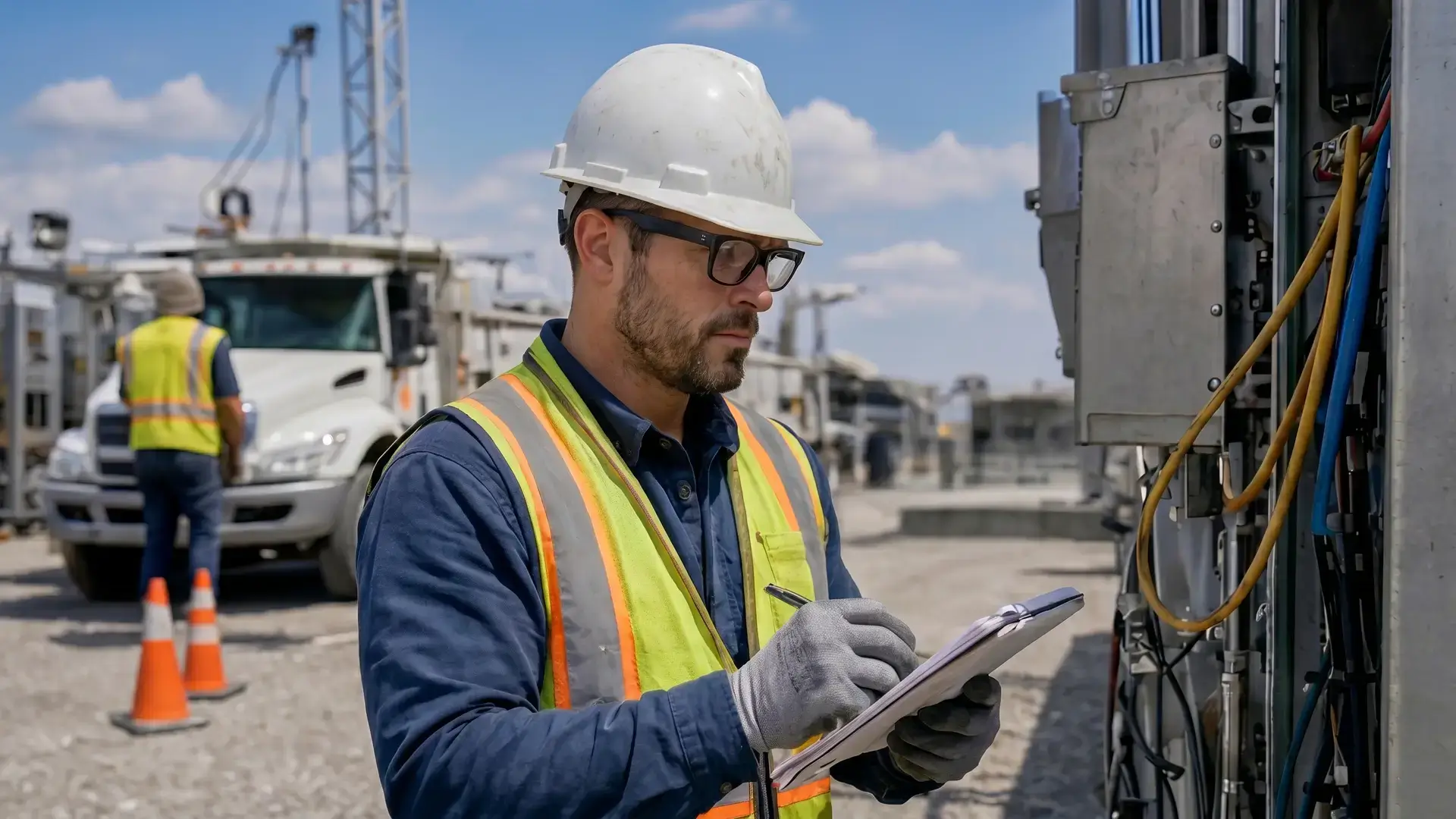
In field service operations, even small execution errors — from missed steps to incorrect installations — can quickly compound into repeat visits, longer job times, inconsistent service quality, and costly truck rolls. 

25%
Nearly 25% of field service visits require a repeat truck roll due to execution errors or incomplete work.
$10K
A single truck roll can cost organizations up to $10K depending on complexity and downtime. 
52%
More than 52% of field service organizations cite technician knowledge gaps as a major operational challenge. 
67%
Customers expect first-time resolution at a rate of 67%, increasing pressure on frontline execution.
Example use cases

Detect & correct errors before they become costly mistakes

Strivr AI embeds consistency, accuracy, and quality assurance directly into field execution, providing technicians with hands-free error detection and immediate delivery of corrective guidance so jobs get done quickly and correctly the first time around.

Strivr AI embeds consistency, accuracy, and quality assurance directly into field execution, providing technicians with hands-free error detection and immediate delivery of corrective guidance so jobs get done quickly and correctly the first time around.

Precision installations

Incorrect setup or missed steps are flagged in real time, ensuring installations are completed correctly the first time 

Maintenance & repair

Technical and mechanical issues are detected, diagnosed, and resolved immediately, reducing the need for potential follow-ups and technicians resolve problems before leaving the site

Quality inspections

Missed checks or incorrect procedures are identified in the moment to ensure compliance

Troubleshooting support

Technicians are guided through complex scenarios without needing to call a supervisor

Safety compliance

Mistakes, missteps, and safety hazards are immediately caught and corrected before they result in accidents and workplace injuries

Documentation accuracy

Incomplete or incorrect job documentation is flagged before submission

What kinds of errors can Strivr AI detect?

Smart glasses integration allows Strivr AI to “see” what your workers see in real-time — enabling instant, hands-free detection of operational errors, inconsistencies, missed steps, missing components, and safety violations that occur within workers’ field of view. In other words, if an issue or error is visible to your worker, Strivr AI will see it and detect it.

How does Strivr AI know if and when a mistake has been made?

Strivr builds customer-specific visual language models (VLMs) to detect when a procedure or task is incorrect, incomplete, or out of sequence. VLMs are AI systems that combine computer vision and natural language processing to understand, interpret, and learn from image- and text-based inputs.

Our Engineering team trains your VLM using multimodal media files (images, videos, PDFs, etc.) that illustrate and/or describe how specific procedures, operations, and workflows are carried out at your company.

Strivr AI leverages this foundational knowledge base to visually compare a specific procedure against its internal understanding of what the “correct” steps for the procedure should look like.

If the execution of the procedure is visually inconsistent with the “correct” outcome, Strivr AI delivers voice-based, audio guidance via the built-in speakers on your workers’ smart glasses to inform them that a mistake has been made, then provides detailed instructions on how to fix it.

Does Strivr AI only work on smart glasses? What devices are supported?

Strivr AI is optimized for smart glasses because they enable hands-free user interaction, real-time interpretation of visual input,  and seamless delivery of voice-based guidance in the flow of work. Supported devices currently include Vuzix Smart Glasses and Ray-Ban Meta AI glasses.

Strivr AI also runs on Android smartphones and tablets for workflows that don’t require hands-free interaction, giving teams flexibility based on their needs, preferences, and working environment.

Does Strivr AI replace operators or automate tasks?

No. Strivr AI supports operators by helping them catch and correct mistakes in real time, improving operational efficiency, standardizing frontline execution, and enhancing output quality without sacrificing human control.

How is Strivr AI different from traditional training?

Training prepares workers ahead of time. Strivr AI supports workers while they work by detecting operational errors and delivering corrective guidance as tasks are performed in real time.

By providing workers with on-demand access to AI-powered guidance and quality assurance support whenever and wherever they need it, Strivr AI can help your team ramp new hires faster, accelerate onboarding, and reduce the need for extensive shadowing and constant supervision. Strivr AI is not intended to fully replace traditional training, but it can certainly be used to bolster, facilitate, and reinforce your current training program.
Get started

See Frontline Intelligence in action

Join us in redefining the future of frontline work.

Explore more industry use cases

Related resources

Explore stories, strategies, and developments shaping the next generation of manufacturing operations.